
About us
Network dedicated to the edification of the Church.
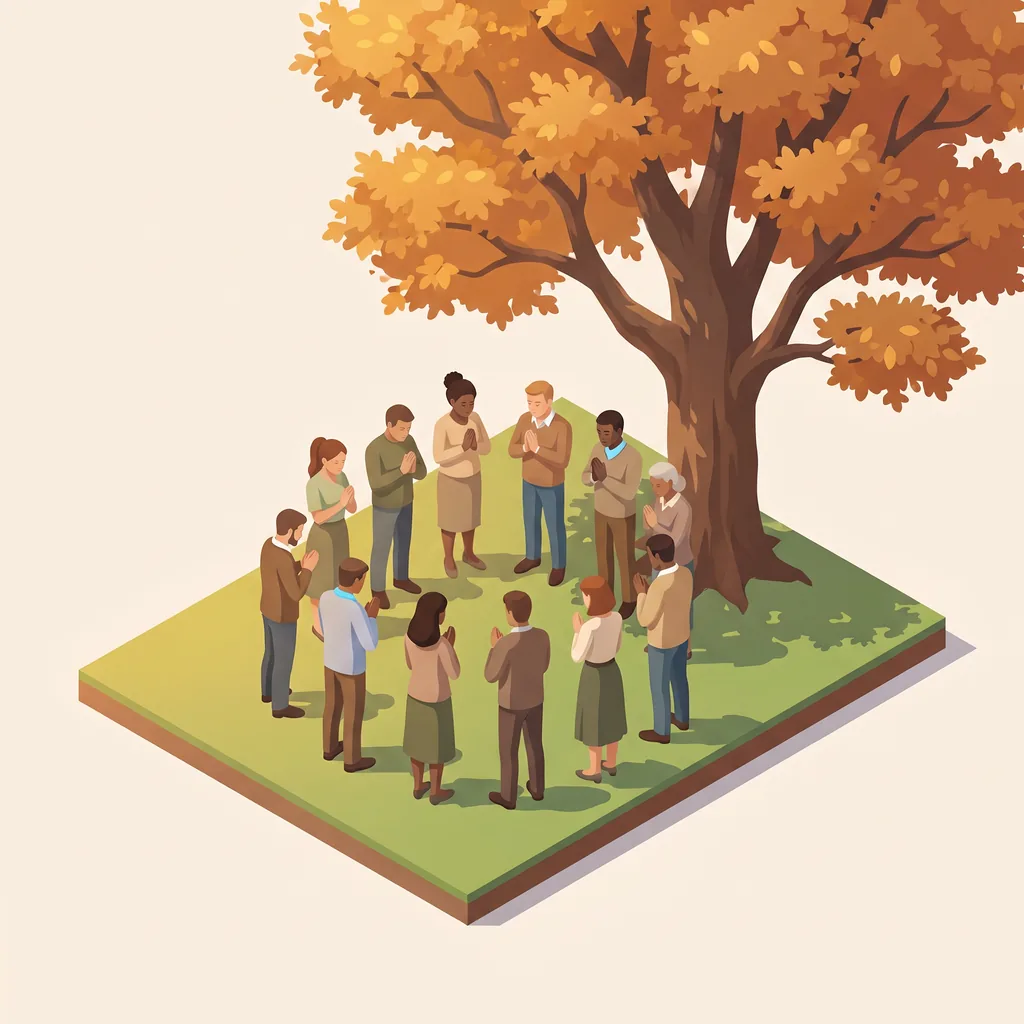
It began with two convictions: that the body of believers is meant to be one, and that serving the afflicted is not optional.
Background
It began with two convictions
We find it imperative to share our origin story, so you understand the heart and the engine behind what we are building.
David first began walking with Christ in the state of New York, an area he once described as “hard soil” (Mt. 13:5 (opens on esv.org in a new tab)) due to an absence of theological conversation and a widespread aloofness toward Christian thought as a whole. As he became further immersed in Scripture, David found that an essential element of Christ's restoration was the unification of the body of believers (Eph. 4:1–6 (opens on esv.org in a new tab); 1 Cor. 12:12 (opens on esv.org in a new tab); Rom. 12:4–5 (opens on esv.org in a new tab)).
While this principle is widely recognized across the Christian landscape, David recognized that this facet of the faith was predominantly referenced with regard to the eschaton, rather than as a concentrated desire to pursue the goal in the present. Initially, he attributed much of the fragmentation he found in the church to the Northeast ecosystem. After leaving New York to relocate out West, and subsequently to the Bible Belt, it was discovered that this contention was not an isolated incident.
To David, the disconnect was clear. As believers, if we pray the Lord's Prayer in supplication, “Your kingdom come, your will be done, on earth as it is in heaven” (Mt. 6:10 (opens on esv.org in a new tab)), it is assured that we should be seeking his aid in this mission every day.
“Religion that is pure and undefiled before God the Father is this: to visit orphans and widows in their affliction.”
Another passion welled up in the hearts of the Daily Bread team from that verse. Service is an integral part of the Christian life. Through both individual and corporate means, we should continuously be seeking, encouraging, and facilitating opportunities to serve the afflicted, and acting as the hands and feet of Christ.
The problem
What stands in the way
In our research we identified obstacles affecting both the unity of the body and the service landscape. We could write a book on each. Under our two convictions, a few of our findings are listed for you to ponder and take into prayer.
Unity
A significant number of individual congregations are internally disconnected.
There are many reasons for this, and it looks different from church to church, but our findings concentrated in three places: communication, coordination, and discipleship.
The ratio of attendees who become members is statistically weak.
Surveys show a disparity between those who attend a church, sometimes for years, and those who take part in an official membership process.
There are few mediums for coordinated effort and corporate fellowship among churches.
Congregations in the same city, often with the same heart for their neighbors, have no shared place to plan or serve together.
Service
Individuals find locating, researching, and assessing ministry opportunities tedious and burdensome.
Because of this, when a service opportunity does not come directly from a person's own church, they are far less likely to take part in it.
Individuals have few mediums to create, develop, and publish their ministry.
Those who do start something report that finding interested people to join the effort is difficult.
43% of church leaders list volunteer coordination as a pressing challenge, and 33% list event management as an added difficulty.See footnote 1
The people carrying the administrative weight of serving are the ones asking for help most often.
1 Pushpay, State of Church Technology 2025: The Future of Connection (Redmond, WA: Pushpay, 2025).
Our mission
Love through fellowship, good deeds through service.
And let us consider how to stir up one another to love and good works.
Uniting the invisible church is an extremely large task, and not one we expect to solve in its entirety. The Daily Bread team commits to making strides in that direction day by day and step by step. Those principles encapsulate exactly what the app facilitates: love through fellowship, and good deeds through acts of service.
Our plan of attack
Three movements, one direction
Movement 1 of 3
Unity
A modern phenomenon in today's church is the inclination of believers to look outside the walls of the church for assistance before seeking aid within their own church body. That behavior results in fewer moments to deepen your relationship with your church family, stifles organic connection, and reduces the opportunities for the body to serve as it has been called to, and for you to experience the blessing of being served in prayer, deed, and word by the church you call home.
This is not to say that seeking outside assistance is unnecessary, or even wrong. Yet when we look at the biblical church, we find believers' needs met by their brothers and sisters in the faith, and those occasions greatly cherished by the church (2 Cor. 8:1–4 (opens on esv.org in a new tab); 1 Cor. 16:1–4 (opens on esv.org in a new tab); Acts 11:29 (opens on esv.org in a new tab); Rom. 15:26 (opens on esv.org in a new tab)).
We do not claim to know every reason for this shifting landscape. The Daily Bread team pledges to do everything in its power to help remedy any disconnect your body may be facing: a secure platform to interact internally within your home church, and externally with the wider body of believers. Experience the love the church has to offer at the click of a button.
Movement 2 of 3
Love
For there to be love, there must be a relationship, and for there to be a relationship, there must first be fellowship. The author of Hebrews writes, “not neglecting to meet together, as is the habit of some, but encouraging one another, and all the more as you see the Day drawing near” (Heb. 10:25 (opens on esv.org in a new tab)).
Every church, ministry, and believer is unique in the gifts they have to offer the body and the world at large. Believers themselves are endowed with particular interests and skill sets, to be offered for the glory of Christ as partakers in his body (1 Pet. 4:10 (opens on esv.org in a new tab); Rom. 12:4–7 (opens on esv.org in a new tab)).
Our aim at Daily Bread is to offer every Bible-believing church and believer a platform to host events dedicated to fellowship and the edification of the church. Partner with other Christians and organizations to discover your interests and pursue your calling.
Movement 3 of 3
Service
When your church is better connected, it becomes easier to serve those outside your walls who need assistance. We have heard it said that it is hard to pour into others when you are not being poured into.
The Daily Bread team is removing the barriers to service, connecting you with local opportunities both within and outside your immediate church. On the network you will find a robust database of official ministry organizations and service opportunities, kept current. Here is an example: if you are passionate about prison ministry, but your church does not currently offer it, we will connect you with prison ministries at other Bible-believing churches, or give you the tools to start one yourself.
While we will always support established ministry organizations, we will never neglect grassroots initiatives. Say you feel called to make sandwiches and hand them out to the homeless in your city: Daily Bread lets you establish your event and connects you with other Christians in your area who share your passion and would love to join your mission. Service and fellowship have never been easier.

“The harvest is plentiful, but the laborers are few; therefore pray earnestly to the Lord of the harvest to send out laborers into his harvest.”